pickleball coaching era Pickleball: Unlock Your Competitive Edge
Age of the serve, the dink, the read on a non-volley zone line, the slow burn of a drill that confirms you’ve learned something new. That is the rhythm of modern pickleball coaching. I have spent more than a decade moving from a weekend hobbyist to a full-time coach, watching the sport swell from hobby courts to clubrooms and regional tournaments where strategy weighs as much as speed. What follows is not a hype-laden manifesto but a field guide drawn from real practice, imperfect experiments, and the stubborn thrill of watching players finally click.
As the game grows, the coaching job does not simply scale up. It changes shape. The era of pickleball coaching is less about teaching a single perfect stroke and more about building a well-tuned toolbox, a way to think under pressure, and a path from uncertainty to reliable execution. You might be a beginner showing up for pickleball classes era Pickleball, or you could be an experienced player chasing a psychological edge in a late-season league. Either way, the fundamentals stay constant while the approach becomes more nuanced.
A practical starting point, which many players overlook, is the curious mix of pedagogy and context. Coaching is not a one-size-fits-all push toward a single technique. It is a conversation about intent. It examines why you move the way you move, what cues you trust, and how you sculpt strokes so they remain effective across different court surfaces, different opponents, and different pace of play. The era Pickleball coaching scene rewards specificity and adaptability. It rewards coaches who can translate high level drills into on-court decisions that your partner can rally around. That translation is what transforms practice time into tournament readiness.
The landscape has shifted in three big ways. First, coaching is more data-informed than ever. We track ball contact quality, shot selection, and court positioning with a gentle mix of video review and self-assessment. You do not need a lab full of gadgets to gain traction, but a consistent eye for detail matters. Second, the practice floor has expanded beyond the gym. Many players train on outdoor courts with wind and sun conditions that complicate footwork and trajectory. A strong coach designs sessions that translate the lab into the street, the club, the open-air court. Third, the social dimension matters. Pickleball is as much a sport of relationships as it is a sport of skills. Your coach should help you navigate communication within a doubles team, interpret partner cues, and develop a shared game plan.
This article is a field notebook. It traces the arc from first contact with coaching to a durable gameplay approach that enables you to compete with clarity and confidence. You will find concrete cues, drill ideas, and storytelling from the court that reflect the real pressures players encounter. The aim is not to showcase clever routines alone but to show how to use them to solve real problems you face in a match.
A practical framework for understanding coaching is to map three core competencies to your current level. These competencies are not rigid milestones; they are anchors you can return to during a season.
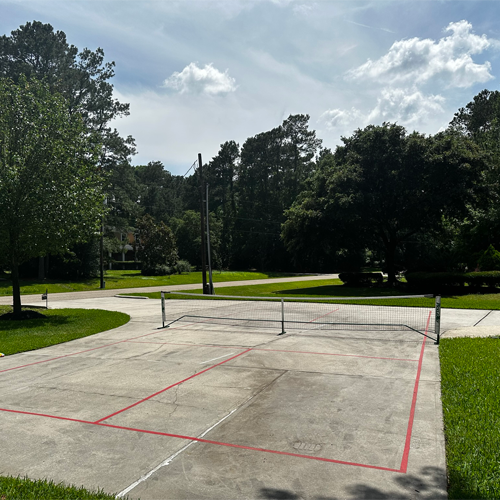
First, physical literacy. That means understanding your body on the court: your footwork efficiency, your balance when you push off, your weight transfer during a dink or a drive. It also includes recovery—how quickly you reset after a point, how you reposition to threaten two or three potential shots. If you want the ball to stay within your control, you must know how you feel in your legs and hips as you move. A coach who emphasizes physical literacy will help you tune movement so your strokes become natural rather than forced.
Second, decision making. Pickleball unfolds quickly, and good choices are often less about the most aggressive shot and more about the safest option that still puts pressure on the opponent. A coach who emphasizes decision making helps you read the current of the point, not just react to the last ball. That means understanding where to aim, when to reset, and how to use your partner as part of a shared plan. It also means knowing when to mix pace and spin to disrupt an opponent’s comfort zone.
Third, technique with intention. The best players cast a wide net of shots and know exactly why they use one over another in a given situation. A coach who teaches technique with intention helps you practice deliberate contrasts. Instead of endlessly hitting cross-court rallies, you drill specific transitions from defense indoor pickleball courts to offense, from neutral to aggressive, from mid-court resets to finishing blows. The idea is to weave a coherent, repeatable arc through a point.
If you are a coach or a player considering coaching, here are five practical questions to ask as you shape your program or your practice plan.
1) What is the balance between technical finesse and strategic understanding in your sessions? A strong coach will not drown you in mechanics without showing how each motion translates to the court. 2) How do you incorporate real match scenarios into drills? Small-sided games and point-based challenges reveal where your tactics break down under pressure. 3) What is your approach to doubles communication and pairing? Coordination out of the box is a skill that often decides close matches. 4) How do you adapt to environmental constraints like wind or uneven surfaces? The best coaches build resilience into training rather than treating such factors as exceptions. 5) How do you measure progress beyond the stopwatch? Clear, observable indicators let players see incremental gains and stay motivated.
Two lists, carefully tailored for emphasis and pace, help crystallize what to seek in a coaching relationship and what to expect from a well-designed regimen. The first list outlines core coaching pillars to evaluate in any program. The second captures practical practice ideas that translate to real matches.
-
Core coaching pillars to evaluate 1) Consistency of movement under pressure 2) Clarity of shot selection in doubles 3) Ability to read opponents and adapt mid-rally 4) Progression from drills to live play 5) Feedback quality that is immediate, specific, and actionable
-
Practical practice ideas that bridge drills to matches 1) Structured transition drills that start at mid-cort and end with an aggressive finish 2) Partner-driven drills that cultivate nonverbal cues and timing 3) Side-by-side games that force faces of pressure to create openings 4) Wind-adjusted herding drills that keep the ball within a safe corridor 5) Video review sessions focused on a single point type, such as the dink battle or third-shot drop
A seasoned coaching philosophy for the era Pickleball coaching combines discipline with experimentation. It respects the craft of stroke mechanics while acknowledging that the most important work happens inside the head. A well-timed shift in focus can turn a player who struggles with pace into someone who can sprint into a rally and still finish with control.
Concrete practice patterns help translate philosophy into tangible outcomes. A foundational drill is the three-zone rally. The court is divided into three bands: the kitchen, the mid-court, and the baseline. Partners rally while staying within their designated zone, but they must execute a shot that pushes the opponent from one zone to another before a winner is declared. This builds court awareness, fosters patience, and sharpens the timing of drop shots and resets. Another dependable pattern is the targeted third-shot sequence. The receiving team drills the return into the best possible third-shot setup, and the serving team practices converting defender-to-offense transitions into pressure points. The beauty of such drills is that they are scalable. You can slow them down for beginners or layer in scenarios for advanced players who need more complexity.
Then there is the art of the dink game, a staple of winning tennis siblings turned pickleball cousins. We spend a lot of time teaching players to vary the height and length of their dink, to pick spots on the court that frustrate their opponent, and to maintain the low center of gravity that makes the dink impossible to pop up for an easy finish. The most valuable refinement comes with selective aggression. A dink is not a guarantee of a point, but a means to shift the opponent into a mistake or a compromised position. A coach who can choreograph this shift, like a good orchestra conductor, keeps the tempo and direction coherent across rallies.
A word about equipment and environment. The era Pickleball coaching environment is not pretentious about gear, but it is particular about setup. The right paddle weight, grip size, and string tension, within a reasonable range, matter. The same logic applies to shoes that offer lateral stability and a sole that grips slick gym floors or outdoor pavement. A coach who pays attention to equipment does not turn emphasis away from technique but complements it. It creates a baseline from which skill can grow rather than a barrier that slows progress.
Channeling the social dimension of the sport, coaching should support teams as a unit. In doubles, communication is not an optional extra; it is a core strategy. The best doubles teams create a simple call-and-response system that reduces miscommunication and accelerates decision making. A coach who emphasizes this kind of partnership helps players develop trust and a shared sense of purpose. In my own practice, I have found that when a pair learns to anticipate each other’s moves, they start to play with a calm confidence that looks almost inevitable on the scoreboard.
As you think about Era Pickleball pickleball training, you will notice the lines between coaching and mentorship blur. A coach does not merely correct errors; they illuminate possibilities. They tell stories of rallies echoed in victories and setbacks. They offer a clear roadmap that allows you to pursue progress without surrendering your curiosity. The best coaches are not merely instructors; they act as navigators who help you find your own best path through the crowded, bright world of competitive pickleball.
The reality of learning, especially in a sport that rewards both speed and precision, is that progress comes in fits and starts. A season can reveal surprising plateaus, moments when a particular skill seems stuck behind a stubborn mental block. A good coach knows how to recognize when to push a little harder and when to pause and rebuild confidence. They keep the long view in mind while focusing the next two or three sessions on tangible, testable goals. This is how you protect momentum while maintaining the health of your body and your relationship with the game.
Pickleball, by its nature, rewards adaptability. The pace of practice shapes your future on the court in two distinct ways. First, it conditions your nervous system to process information quickly. Second, it trains your muscle memory to favor habit over hesitation. A coach who understands this dual effect designs sessions that challenge your cognitive flexibility and your physical resilience at the same time. In turn, you become a player who does not just hit balls but makes decisions with confidence under pressure.
The coaching ecosystem around era Pickleball is diverse. You will encounter former pros who pivot to teaching, teachers who discovered the joy of the sport later in life, and athletes who view coaching as a way to give back to a sport that gave them structure and purpose. The variation in background matters because it broadens the vocabulary coaches bring to a session. Different phrasing, different demonstrations, and different touch points can unlock a concept that a player previously found inaccessible. A thriving coaching culture is one that welcomes this diversity, curiosity, and honest feedback.
If you are evaluating pickleball classes Era Pickleball or erapickleball.com pickleball classes for yourself or your group, the best first step is to pilot a few sessions with different coaches. Observe how the coach frames goals, how they structure the warm-up, and how they adjust on the fly when a drill does not land as expected. Do they iterate quickly, or do they cling to a plan that clearly isn’t working? Are they rigorous about tracking progress, or do they rely on mood and vibes alone? These signals are often more telling than credentials.
A robust coaching relationship is layered. It is not just a set of drills but a cadence of growth that aligns with your life schedule. For some, the path looks like weekly sessions that build incremental improvements over months. For others, it unfolds as a concentrated, high-intensity block of practice before a tournament. Either approach can work if there is clear intention, reliable feedback, and a plan that respects your body.
When players ask me what the core of modern coaching is, I answer with three words that capture the essence: clarity, rhythm, accountability. Clarity means you know what you are aiming for in each drill, and you understand the reasoning behind every cue. Rhythm refers to maintaining flow through a session, balancing intense work with strategic rest intervals, so your nerves settle rather than fray. Accountability is the gentle, persistent expectation that you will show up, do the work, and reflect on the results honestly with your coach.
Here is a snapshot of the kind of progression you can expect from an effective program that embraces the coaching era of pickleball. In the first phase, you absorb the language of the game. Your coach translates terms into action, and you begin to feel the court as a system rather than a collection of independent shots. In the second phase, you start to anticipate your opponents. Your decision making comes with smoother tempo, and your shots begin to land more consistently under pressure. In the third phase, you fuse strategy with technique. Your partner moves with you in a coordinated rhythm, and your team begins to win more often not by sheer power but by smart, shared action. And in the fourth phase, you graduate to confident autonomy. You can self-correct in the moment, adapt to new partners, and teach a younger player how to approach a difficult drill.
This kind of evolution does not happen in a vacuum. It requires a culture that supports honest assessment and patient refinement. Coaches need to celebrate small wins just as much as big breakthroughs. They also must acknowledge when a plan fails to deliver, and they should adjust with courtesy and precision. A good program uses a feedback loop that turns the encounter with a difficult moment into a learning opportunity rather than a setback.
There are legitimate limitations to every coaching approach. Some players crave structure while others seek creative exploration. Some programs lean into weighty drills that push you toward a high ceiling, while others favor gentler, more sustainable progress. A mature coaching environment recognizes those needs and offers flexible pathways. It provides different tracks for different objectives, whether your aim is league consistency, tournament readiness, or simply the joy of playing more effectively with friends.
This is why choosing the right coach or program matters. The best environments offer not only drills and technique but also a philosophy you can subscribe to. They foster a growth mindset, where mistakes are treated as data to inform the next iteration. They insist on reliable communication, so you always understand what is expected and you can voice concerns when something does not feel right. They also build community, because the sport thrives when players share tips, celebrate improvements, and challenge each other to keep pushing.
If you have never joined a structured pickleball coaching program, you might wonder how to begin. Start with curiosity rather than commitment. Attend a few sessions with different coaches, note the kinds of feedback you receive, and observe how they respond when goals shift or a drill goes sideways. If you see a trainer who demonstrates patience, practical insight, and a willingness to adapt, that is a strong sign. You want a partner in your development who does not simply correct your form but who helps you craft a plan that aligns with your life outside the court.
In the end, the era Pickleball coaching represents a maturation of the game. It is a shift from solitary practice to curated learning experiences that connect technique with strategy, movement with decision making, and personal growth with team dynamics. It is about turning practice minutes into match-winning habits, and it is about turning potential into results you can rely on.
For many players, that is the ultimate goal: to walk onto the court with interpretive clarity, to feel the rhythm of the rally, and to know that whatever happens, the next shot is an informed choice rather than a guess. The coaching scene acknowledges the complexity of this sport and meets it with a practical, patient approach that values outcomes as much as effort. It invites you to commit to a process, to trust the coach you work with, and to keep showing up with the willingness to learn and improve.
A closing thought from the vantage of years spent on the courts: progress in pickleball does not arrive as a flash of genius. It lands in the careful repetition of purposeful practice, the willingness to adjust after a tough point, and the discipline to maintain form under fatigue. The coaching era recognizes that for most players, excellence is built brick by brick, session by session, with a coach who can translate theory into the feel of a successful rally. If you are ready to invest in that path, you will notice the difference in your game before the season ends, and you will sense it again in every match you play thereafter.