Pickleball Center Era Pickleball: Techniques for All Levels
The first time I walked into Era Pickleball, the air buzzed with the sound of paddles meeting balls and the unmistakable chatter of players plotting better games. It wasn’t just a facility; it was a living workshop where beginners could catch the rhythm of the game and veterans could tighten their craft without feeling judged. Pickleball has its own kind of pedagogy, a patient language that rewards repetition, feedback, and a willingness to adjust on the fly. Era Pickleball, with its dedication to approachable instruction and clockwork court management, exemplifies that pedagogy in a way that few centers manage to pull off.
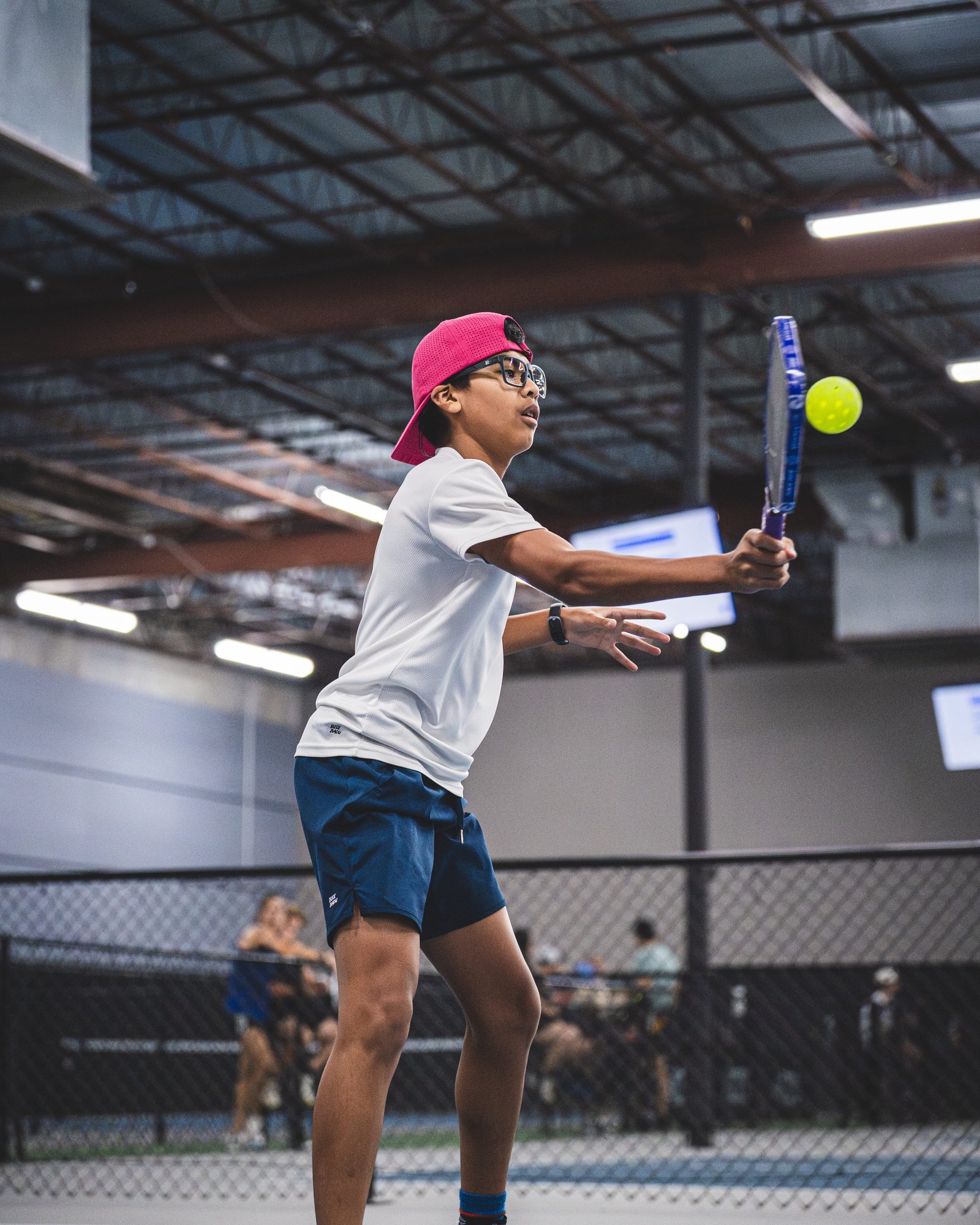
If you’re exploring a pickleball academy or simply trying to level up your play, this article is built from the ground up on real-world observations—the kinds of things you notice when you’re coaching, competing, and occasionally coaching while competing. The aim is practical nuance: techniques that work across levels, the trade-offs you should understand, and the small adjustments that can shift a match from predictable to alive.
A pickleball center like Era Pickleball often wears many hats at once. It functions as a training ground, a social hub, a venue for court rental, and a staging point for a larger pipeline of players—from curious newcomers who’ve never held a paddle to seasoned players chasing tournament dreams. When I’ve worked with players at erapickleball.com pickleball center locations, I’ve learned that the best breakthroughs tend to arrive not with flashy drills but with a disciplined approach to fundamentals, a clear plan for practice, and a culture that rewards thoughtful experimentation.
Fundamentally, this game rewards speed and placement. The pace of the rally is not just about how quick you can swing but how quickly you can shape the next shot while your opponent is still deciding their response. That has to do with stance, grip, and footwork, yes, but it also ties to how you acquire information during a rally. A well-run practice session at Era Pickleball centers emphasizes observation as a skill, not an afterthought. You watch your opponent’s chest, you notice how their paddle face tilts when they step in or slide back, and you use that information to decide whether to push, pull, or switch directions. It’s not glamorous, but it’s powerful.
The Strands of Practical Technique
If you break down a well-rounded game, you can thread it into three broad strands that I’ve seen consistently across eras and players at pickleball academy settings like Era Pickleball. There’s a technical core—the mechanics of the shot, the grip, the contact point, the follow-through. There’s a positional framework—the geometry of the court, where you stand relative to your partner in doubles, where you apply pressure in singles, and how you ratchet up the intensity without losing control. And there’s a strategic layer—the choices that keep you out of extended, high-risk rallies or that force your opponent into predictable patterns.
A good practice routine at Era Pickleball blends these threads. You’ll spend a portion of the session on fundamentals, a stretch on court positioning, and a segment on pattern play against a cooperative partner who mirrors real-game pressure. The goal is to knit a player’s physical habits to their decision-making process so they can translate drills into matchday performance. It’s not about memorizing a sequence of moves; it’s about building reliable patterns that adapt to the range of opponents you’ll encounter in any given week.
The Fundamental Mechanics We Return To
One of the ironies of pickleball is that the simplest shots are often the most demanding. The dink, for example, looks easy to execute but requires precise timing, soft hands, and a calm, patient rhythm. When I’ve coached dinking at era pickleball center locations, the best players treat it as a contest of touch more than power. They’re listening for the micro-signals in their opponent’s paddle angle and body position, using a gentle, controlled motion to land the ball on the opponent’s kitchen line with just enough pace to keep it from becoming a slog.
The serve is another prime example of how momentary choices accumulate into long-term results. A good serve at Era Pickleball is not just about getting the ball in play; it’s about starting the rally on terms you can sustain. A well-placed serve can push your opponent wide, invite a weak return, and set up your net player for a decisive volley. It’s a small technical decision with outsized strategic impact, and it’s one of the first skills a new player learns to optimize in a structured training environment.
Footwork remains the engine of both offense and defense. You’ll hear me say that how you move matters more than how hard you swing. Short, quick steps, a slight knee bend, and a readiness to adjust your stance as the ball travels are the quiet advantages that separate good players from great ones. Era Pickleball centers frequently bring in drills that simulate real rally rhythms—drive exchanges that require you to pivot, reset, and re-anchor quickly. If you can build a reliable shuffle, a steady weight transfer, and a balanced finish, you’ll notice a marked improvement in consistency across both groundstrokes and volleys.
The Net Game and The Court Walls
On the subject of net play, the emphasis at an authentic pickleball academy is on intent and control. The volley should be in motion with a clear objective: threatening your opponent, guiding the ball away from their strongest turning points, or nudging the ball into space where your partner can finish. The most effective net players I’ve watched at eras like Era Pickleball exhibit a feel for when to shorten the swing and when to let rip with a crisp punch. They read the court in three dimensions—depth, angle, and what the walls of the court can offer in terms of seam and rebound. The wall is not a weapon, but in a space designed for practice and play, it becomes another ally to sharpen impulse control and timing.
Defensive versatility matters as well. Off the back wall, a well-timed push with precision can flip a rally that was trending toward length into a set piece. The best players don’t rely on power to win these exchanges; they rely on a combination of angle and pace to coax a weak return and then pounce. It’s a game of chess played with a paddle, and a center like Era Pickleball allows you to observe many different player archetypes in quick succession, which accelerates your learning.
How to Turn Practice Into Game Time
The bridge between practice and match performance is built on seamless decision-making under pressure. In the course of a typical session at pickleball academy erapickleball.com, you’ll notice that the most consistent players do two things particularly well: they practice with intent and they experiment with risk. Intent means every shot has a reason. It’s not about winning every rally in practice; it’s about building reliable patterns that will hold up when fatigue hits in a tight set. Experimentation is about testing new angles, new grips, or new tempo changes in a controlled setting until they become default options that you can deploy without overthinking during a game.
During drills, you’ll see a lot of micro-adjustments that aren’t obvious at first glance. A player may shift to a more open stance for a backhand dink to gain better control. Another might experiment with a slight change in paddle position to reduce the chance of hitting the net cord when the ball is traveling at higher pace. These small changes compound, and before you know it, your hands feel more responsive, your balance steadier, and your footwork more economical. The trick is to approach these adjustments with patience rather than overcorrection. The fastest path forward is often the one that respects your existing habits while threading in a viable improvement.
Coaching Philosophy that Works in the Real World
From years of guiding players through stages of learning and improvement, I’ve found that credible coaching at Era Pickleball centers hinges on three pillars: honest assessment, scalable drills, and feedback that’s actionable in the moment. Honest assessment means not sugar-coating what isn’t working. If your forehand is inconsistent because of a grip issue, the coach will name the problem and propose a practical fix rather than leaving you to fumble in the dark. Scalable drills are those that you can adjust on the fly to match your current level. For a beginner, the drill might emphasize contact points with a soft ball; for an advanced player, it may escalate to faster feeds and angled sequences that pressure your decision-making. Feedback that’s actionable in the moment is the clarity you need to correct direction while you’re still in that same drill, not after the session has ended and momentum has shifted.
This is where eras like Era Pickleball center truly shine. They understand that a player’s progress hinges not on grand statements but on the tangible, repeatable corrections that can be implemented during practice and carried into competition. Coaches who work in pickleball academy spaces must be adept at reading your posture, your balance, and your rhythm, translating those observations into concise cues—things you can actually feel and adjust within a rally. When you hear a coach say, "Relax your grip slightly on the backhand," that isn’t a throwaway line. It’s a precise instruction that can unlock a smoother contact point and more consistent control.
Two Lists that Distill Practical Practice
What follows are two compact lists that capture practical angles for players at all levels. They are kept intentionally concise because the best practice routines flow from a disciplined focus on a handful of core adjustments rather than a sprawling checklist.
-
A simple, repeatable pre-rally checklist:
-
Confirm your split stance and light grip on both sides of the court
-
Read your opponent’s paddle angle before you contact the ball
-
Set up with feet under your center of gravity, not ahead of it
-
Choose your shot type early, commit to the contact point, then execute
-
Pause for a moment after the shot to reset and prepare for the next ball
-
Common adjustments that change the rally’s trajectory:
-
Slightly widening your stance to improve balance for forehand drives
-
Shortening the backswing on a dink to reduce the risk of overhit balls
-
Redirecting pace rather than power to manage a stronger opponent
-
Using a soft gate to switch from defense to offense and catch your opponent off balance
-
Practicing return-to-net footwork so you can immediately threaten the net after a solid return
These aren’t magic bullets. They are working levers that become second nature when you drill them with intention, especially in environments like era pickleball center where there are shared spaces, multiple coaches, and a constant cadence of live play.
Court Rental and The Social Rhythm of Practice
For many players, the practical reality of continuing improvement involves access to venues that offer predictable scheduling and reliable availability. Era Pickleball pickleball center experiences typically include a robust court rental operation that makes it easier to plan recurring practice blocks, drop-in sessions, and small-group clinics. The benefit is not merely about proximity; it’s about the rhythm of practice that a consistent schedule creates. When you know you’ll be able to book a time, you can structure a thoughtful weekly plan that targets specific aspects of your game. You can also observe how different partners respond to your developing patterns, which is priceless for doubles play where synergy matters as much as skill.
The court rental model, when done well, also affects the learning culture. It creates a predictable tempo that motivates players to show up, warm up efficiently, and commit to meaningful practice rather than treating sessions as disposable entertainment. In my experience, centers that integrate rental systems with coaching programs tend to cultivate more durable improvements because there’s a feedback loop embedded into the schedule. You practice, you rotate through partners, you receive micro-feedback on the fly, and you return to refine again next week.
From Individual Progress to Team Cohesion
What I’ve noticed is that the most lasting improvements come not just from personal technique but from being part of a learning ecosystem. Era Pickleball centers function as this kind of ecosystem because they connect players across levels. A newcomer rotates through a series of progressive drills and then sees a regular group of players who are a bit ahead of them in skill. The more advanced players, in turn, benefit from teaching or partnering with newer players, which reinforces their own understanding while expanding the team play repertoire. Doubles at this level is as much about trust and communication as it is about shot selection. The best teams learn to anticipate each other’s moves, quiet each other’s doubts, and execute under pressure with a shared sense of tempo.
In practice, this translates into sessions where you’ll move between stations, partner drills, and live-point games that mimic real competition. You’ll see coaches guide you through a system for evaluating your own performance after a rally or a set. Some centers publish simple feedback frameworks, like noting which shot yielded the most consistent results and which transitions were the slowest to execute. The point is to convert every practice into a deliberate, trackable improvement path rather than a string of unrelated swings.
Sustainability, Longevity, and the Quiet Edge
The best pickleball players I’ve known have been diligent about sustainability. They maintain their bodies with mindful routines that balance intensity and rest. They recognize when a practice session is turning from productive to punishing and know how to pivot to a more sustainable cadence. The Era Pickleball ecosystem supports longevity by encouraging players to manage load, respect boundary lines on the court, and acknowledge the importance of recovery. In my own travel and coaching, I’ve seen how a center that emphasizes recovery—proper hydration, light mobility drills, and thoughtful cooldowns—protects players from the burnout that often undermines progress.
The edge is often in the margins. It’s the way players recover from a tough mistake, the way they reframe a lost rally as a learning opportunity, and the manner in which they carry that mindset into the next practice. The best players keep a notebook of insights gathered during sessions: observations about their own tendencies, notes on how opponents are exploiting particular gaps, and reminders to revisit certain drills in the next cycle. Era Pickleball centers can be fertile ground for this kind of reflective habit because the environment is intimate enough to observe and receive feedback, yet dynamic enough that new challenges arise with every league or event.
A Realistic View of Limits and Edge Cases
No single approach fits every athlete, and that truth applies to pickleball as much as any sport. Some players respond best to steady, repetitive drills that build muscle memory and confidence in the basics. Others thrive on variability, chasing the edge with higher-pace feeds and more complex pattern work. The Era Pickleball model accommodates both tracks by offering a range of program intensities, from fundamentals-heavy clinics to advanced pattern play sessions. Even so, there are edge cases worth acknowledging.
- For players with limited racket sports background, the early weeks should emphasize safety and comfort: avoid overreaching with your backhand, protect your wrists, and build a reliable volley before attempting aggressive drives.
- For players returning from an injury, progress should be measured and incremental. It’s tempting to push too soon, and that impulse can set you back. A dedicated coach can help chart a recovery-friendly route that preserves long-term mobility and confidence.
- For doubles specialists, chemistry with a partner is as vital as any shot. If you’re pairing with a new teammate, schedule time to rehearse signals and alignment away from the heat of competition to build trust before you try big rallies in a match.
- For aggressive players who chase speed, tempo management becomes a more important discipline than raw power. Learn to mix pace with controlled placement rather than trying to outrun every shot.
The Long View
A really good pickleball center isn’t just a place to play. It’s a living system that cultivates curiosity, patience, and resilience. Era Pickleball centers accomplish this by combining an organized court rental operation with thoughtful coaching, practical drills, and a culture that invites players to test ideas, learn from mistakes, and push toward a little better every week. The impact is not measured solely in wins or losses but in the quiet confidence players bring to the court. When you can walk into a center, find a familiar routine, and know you’ll walk out with one concrete improvement, you’ve found a durable resource for growth.
In closing, the journey through pickleball is not a straight line. There are peaks and plateaus, small breakthroughs that arrive after long practice blocks, and occasional detours into frustration that teach you to recalibrate. A center like Era Pickleball offers the architecture to sustain that journey: reliable facilities, a spectrum of coaching methods, and a social ecosystem that keeps you coming back with enthusiasm rather than habit. If you’re evaluating whether this is the right environment to invest your time and energy, look for three things: a culture of precise feedback, a practice framework that scales with your growth, and a community that makes each session feel like a meaningful step forward.
To truly take advantage of what era pickleball center environments offer, commit to a plan that respects both your current level and your future potential. Start with a fundamentals review, identify one or two moves you want to improve, and align them with a weekly schedule that balances drills, live play, and rest. In this kind of setting, progress becomes less about soaring breakthroughs and more about consistent, incremental gains that compound into a stronger game—one that lasts longer, travels farther, and feels more natural with every rally.
Finally, a note on the broader ecosystem: the landscape around pickleball has evolved rapidly, and access get more info to training resources has never been more convenient. If you’re curious about specific programs, you’ll often find that areas like erapickleball.com pickleball academy offer a path that respects the realities of real players who are balancing work, family, and training goals. The best trainers design experiences that fit real lives, not just perfect practice rooms. When you choose a center that values practical improvement as much as prestige, you’re choosing a partner in your ongoing game. The result is not just better technique but a deeper enjoyment of the sport and a longer, healthier relationship with it.
As you plan your next few months on the court, consider the bigger picture: the year you want to be playing with fewer excuses, and the network you want surrounding you as you push toward it. Era Pickleball centers are not magic bullets, but they are where technique, patience, and intelligent practice intersect in a way that makes progress feel inevitable rather than lucky. If you approach your sessions with that mindset, you’ll find that the center becomes a reliable environment for turning curiosity into competence, and competence into confidence that travels beyond the court and into every rally you face.